
Founded in 1956 to supply Austria with energy, OMV has spent 70 years re-inventing the company to meet the demands of each new era. Now, as we enters our eighth decade, we are focused on powering the energy transition.
When Österreichische Mineralölverwaltung Aktiengesellschaft – now known as OMV – was founded on 3 July 1956, our mandate was straightforward: supply a recovering Austria with energy. Seven decades later, we employs around 22,300 people worldwide and generated revenues of around EUR 24 billion in 2025. OMV has moved from being a traditional oil and gas company to one focused on the circular economy, new technologies and alternative energy sources.
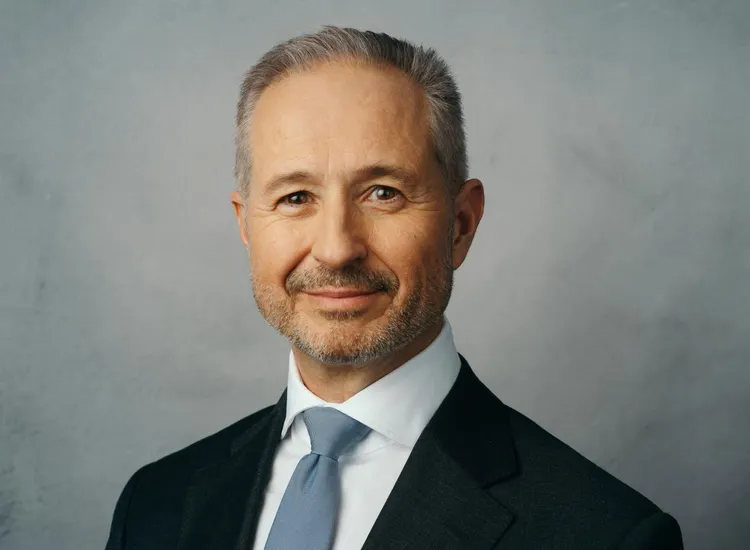
Seventy years ago, OMV emerged from an idea that was bigger than any single project: to supply Austria securely with energy and to create value through domestic production.
Alfred Stern
Chairman of the Executive Board of OMV Aktiengesellschaft & Chief Executive Officer (CEO)
"Today, we are in the midst of the greatest transformation in our history." That transformation is the subject of Strategy 2030 – the most fundamental strategic shift since the company's founding – which sets out OMV's path to becoming an integrated sustainable energy, fuels, and chemicals company, striving to achieve net zero by 2050 .
"We think in cycles rather than linearity, partnerships rather than going it alone, innovation rather than standstill," says Stern. Investments in new technologies, new business models and a future energy system are part of this evolution.
Advances in geothermal energy
One example of that transformation is OMV's move into geothermal energy. In 2023, OMV and Wien Energie founded the joint venture "deeep" with the goal of making deep geothermal heat a reality for Vienna's district heating network. Together we plan to build up to seven deep geothermal plants with a total capacity of 200 megawatts – enough to supply around 200,000 households with heat in the future.
The first plant is being built in Aspern, in Vienna's 22nd district. Deep drilling was successfully completed in 2025, and the plant is expected to provide heat for around 25,000 households from 2029. The project is a direct product of OMV's geological heritage. Godfrid Wessely, who joined OMV in 1959 and served as OMV's chief geologist, reflects: "Back then we were not only searching for hydrocarbons; we were at the same time creating the geological coordinate system that is today of central importance for the use of hydrothermal geothermal energy." The data gathered across those decades of exploration now forms the foundation for geothermal research and exploration.
Closing the loop on plastics
Another pillar of OMV's future strategy is circular economy, specifically solving one of the most persistent problems in modern materials: what to do with plastic waste that cannot be mechanically recycled. OMV's answer is ReOil®, a chemical recycling technology developed at the Schwechat site that converts hard-to-recycle plastic waste into synthetic oil, which can then be used as a raw material for new plastics. The approach is designed to complement conventional recycling and to recover value from materials that would otherwise be incinerated or sent to landfill.
Together with plastics recycling company Interzero, OMV is building one of Europe's largest sorting plants for mixed plastic waste in Walldürn, Germany. Commissioning is scheduled for 2026, and the facility is intended to support the broader expansion of the circular economy at scale. With the formation of the joint venture Borouge International in March 2026, we have also strengthened our position in the chemicals sector. The goal is to position OMV for the future in key sectors.
Fueling clean aviation
Decarbonizing aviation is a real challenge for the energy transition. Electric propulsion and hydrogen solutions remain in early development for commercial flight, which means sustainable aviation fuels (SAF) are increasingly important. OMV first produced SAF at the Schwechat refinery in 2022. The fuels can be used in existing aircraft without technical modifications and significantly reduce CO₂ emissions over their life cycle compared with fossil kerosene. To expand production, OMV is investing in new plants at the Romanian site of Petrobrazi – a move that also positions the company to meet European regulatory requirements that will progressively raise the share of SAF in aviation fuel in the years ahead.
Energy security
Natural gas continues to play a role in a responsible transition. In May 2026, OMV officially started natural gas production at Wittau in Lower Austria, the largest gas discovery in Austria in four decades. The Neptun Deep project in the Black Sea represents another significant new extraction venture. Both reflect OMV's commitment to European energy security at a time when the continent is actively diversifying away from Russian supply – a process accelerated by our decision to withdraw from the Russian market following the war in Ukraine. Security of supply remains inseparable from the transition itself: the path to a sustainable energy future must be built on a stable foundation.
Investing in innovation
Whether geothermal energy, recycling or SAF, many of OMV's future projects are technology-driven. The planned Innovation Hub in Schwechat is a EUR 65 million facility designed to move new technologies more quickly from the laboratory phase into industrial application. The aim is not only to develop innovations but to implement them at scale, addressing what we sees as a central challenge for Europe: connecting innovation processes more closely with existing industrial infrastructure.
In 2025, the largest green hydrogen production plant in Austria began operation, signalling that we no longer see our role solely as an oil and gas group, but increasingly as a provider of diverse energy solutions. Green hydrogen is regarded as an important energy source of the future, helping to reduce CO₂ emissions in hard-to-abate industries. It is a conviction that runs through all of our future-facing work: the technologies of tomorrow must be built, tested and scaled today.
For Samantha Stadlober, an OMV apprentice who joined the company around 18 months ago, the transformation is already visible on the ground. "Even today it is clearly noticeable that the sector is in profound transition," she says. "OMV is pursuing ambitious climate targets and working intensively to develop its plants and processes accordingly… I believe digitalization, efficiency gains and sustainable technologies will play an even greater role in the future."
The next 70 years
Seventy years after its founding, OMV is a company that has repeatedly reinvented itself to meet the demands of its time. From the Schwechat refinery to the Trans-Austria Gas Pipeline (TAG) – all these projects show how energy must progress. The next 70 years will be shaped by geothermal heat beneath Vienna, circular plastics in Walldürn, sustainable fuels in Petrobrazi and green hydrogen in Schwechat. The transformation, as Stern says, is the greatest in our history.